October, 2026


For most of modern medicine, diagnosis followed a familiar rhythm: a rushed history, a few key questions, a limited set of labs or scans, and a clinician forced to make sense of it all in 15 minutes or less. The constraint was data scarcity. Today, clinicians are drowning in information from EHR notes, imaging, labs, risk scores, guidelines, inbox messages, and the new constraint is attention. Emerging clinical AI tools are starting to flip that equation: instead of asking doctors to hunt across systems, they listen, synthesize, and surface what matters for a specific patient, in a specific moment, in a specific exam room. Diagnosis stops being a one-shot guess and becomes an ongoing, data‑rich conversation.
What’s different now is that this is moving into real medicine, not just research slides. Studies of AI decision support in primary care show that when generalists are trained to use AI, they make better diagnostic and management decisions without extending visit length.
In parallel, health systems are deploying deep models on live EHR data to predict who is likely to progress from mild cognitive impairment to Alzheimer’s disease, or who is at a heightened cardiovascular risk after a complex procedure, as inputs to risk stratification and outreach. Lab leaders expect AI to move beyond reading slides or scans to combining structural biology, imaging, and clinical context so the system can flag the right next test or intervention. Practicing medicine is still hard but the nature of the hard work is changing.
What Might Be Around the Corner?
Expect the diagnostic conversation to start before the encounter and continue long after it ends. AI‑augmented intake tools will pre‑assemble a differential based on symptoms, history, and prior data, while copilots inside the EHR will suggest missing labs, highlight dangerous drug interactions, and nudge clinicians toward guideline‑consistent care without dictating decisions. We’ll see the first wave of “pre‑visit medicine,” where at‑risk patients are identified and engaged weeks or months before they would normally present with overt symptoms.

AMIE (Articulate Medical Intelligence Explorer) is an LLM‑based system optimized for clinical diagnostic conversations that has been put head‑to‑head with primary care physicians in simulated patient encounters. Across structured evaluations of history‑taking, diagnostic reasoning, communication, and empathy, AMIE was rated at or above human physicians on most clinically meaningful measures and used chain‑of‑reasoning to “think out loud” and refine its answers as new information emerged. For healthcare brands, this signals a near‑future in which conversational diagnostic agents will often be the first “clinician” to interpret symptoms, contextualize risk, and frame therapeutic options for both patients and providers. Your product’s role will depend on whether your evidence can be easily surfaced and explained in that dialogue.
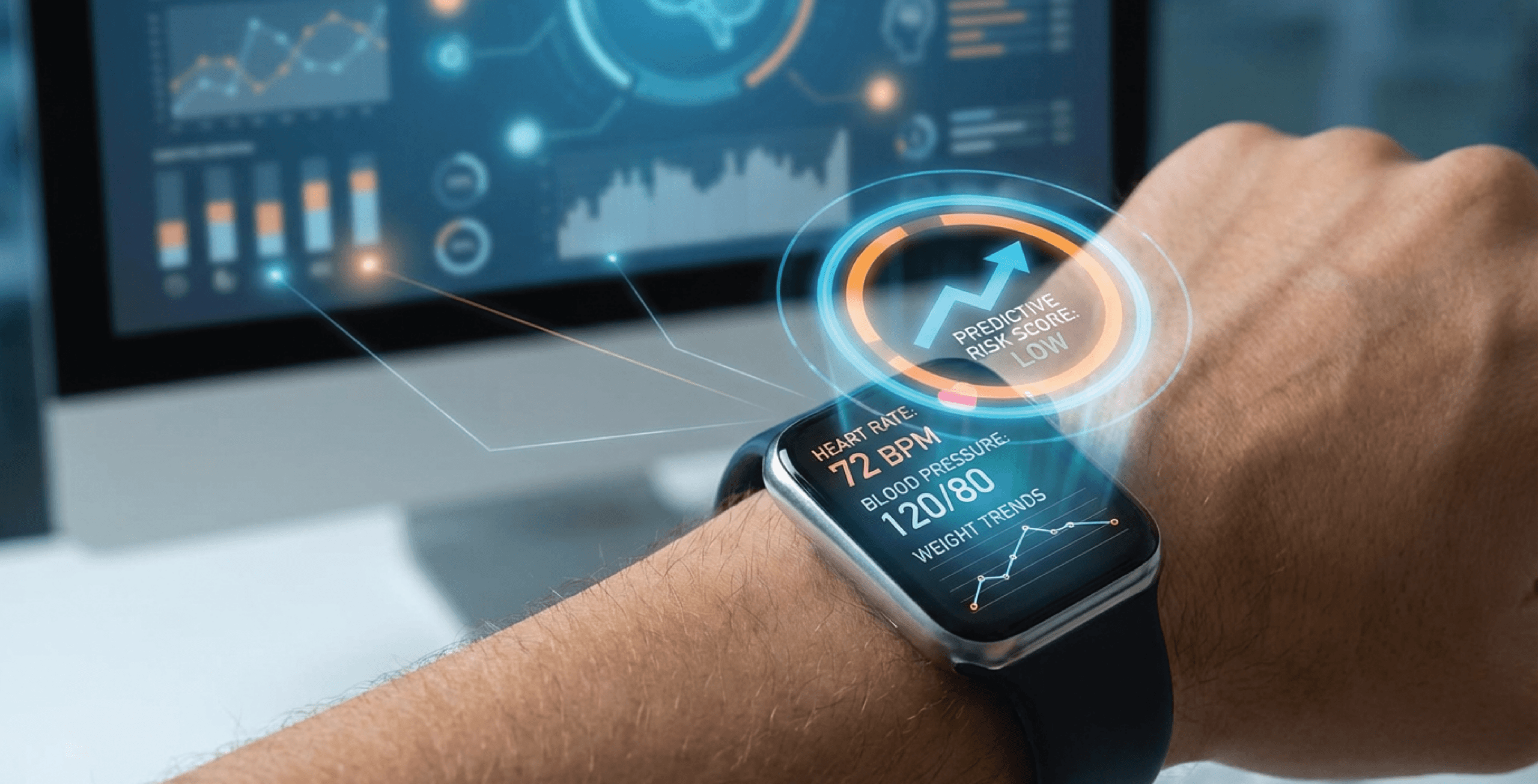
In January 2026, FDA guidance widened the lane for AI‑enabled wearables and risk‑prediction tools, carving out more “general wellness” features that can bypass traditional device review, so long as they avoid explicit diagnosis or treatment claims. An example includes software that estimates future cardiovascular risk from weight, smoking status, blood pressure, and lab values. At the same time, the guidance draws a bright line: once models narrow to short time windows, rely on higher‑risk data like genomics, or move from offering “insight” to directing care, they snap back into full device regulation. For health systems and brands, this means many predictive AI features can now scale quickly in the background, shaping how patients and clinicians think about future disease, while product teams must make deliberate choices about which side of the wellness-medicine boundary they belong on.